New Orleans, Louisiana
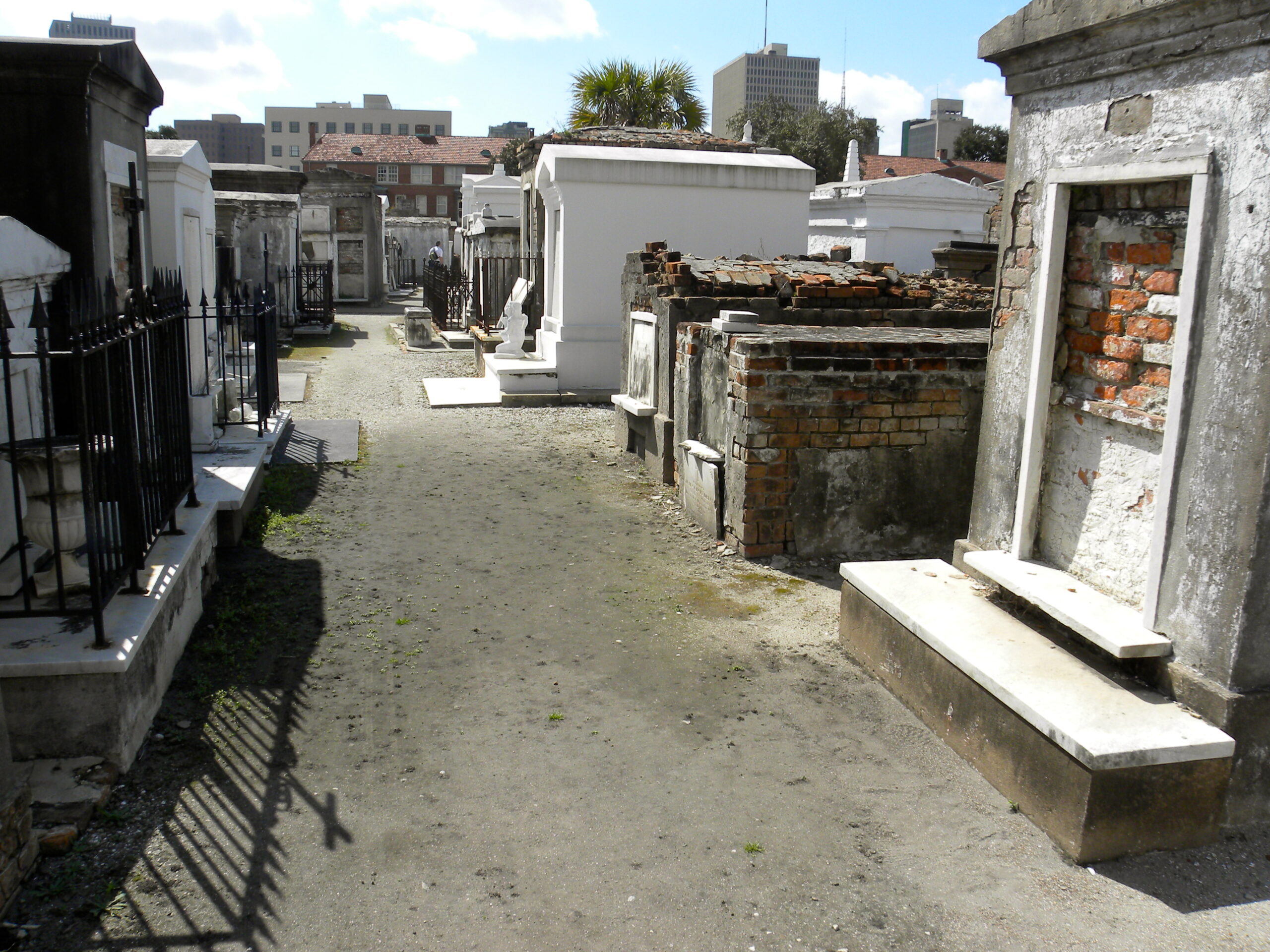
Few burial grounds in America carry the mystique and notoriety of St. Louis Cemetery No. 1. Located just outside the French Quarter in New Orleans, this cemetery was established in 1789, replacing the city’s older St. Peter Street Cemetery. It is the oldest surviving cemetery in New Orleans and remains one of its most visited historic landmarks.
Designed in the traditional above-ground style, the cemetery reflects both the city’s French and Spanish colonial heritage and its practical need to build vaults above the water-saturated soil. Within its walls rest generations of New Orleanians—politicians, soldiers, immigrants, artists, and families whose stories shaped the Crescent City.
One of its most famous interments is the legendary Voodoo priestess Marie Laveau, whose influence in 19th-century New Orleans extended across cultural, racial, and religious boundaries. Other notable figures include Homer Plessy, of the landmark Plessy v. Ferguson Supreme Court case, and Étienne de Boré, the city’s first mayor.
Over time, the cemetery has become a symbol of New Orleans itself: vibrant, storied, multicultural, and touched by both beauty and tragedy.
Paranormal Claims
Given its age and its role as the final resting place for thousands, it is little surprise that St. Louis Cemetery No. 1 has inspired generations of ghost stories. Visitors often report ghostly apparitions wandering between the tombs, whispers echoing through the narrow passageways, and cold spots even on sweltering Louisiana days.
The most enduring legend surrounds Marie Laveau. Many claim her spirit lingers near her tomb, granting favors or curses to those who leave offerings—or who fail to show respect. Coins, beads, candles, and written petitions continue to appear at her resting place. For years, visitors would also mark three “X”s on the tomb in hopes of invoking her spirit, though this practice caused significant damage and has since been prohibited.
Other tales speak of phantom processions seen winding through the cemetery gates, as if funerals from centuries past were still replaying. Some visitors describe spectral figures in period clothing vanishing behind tomb walls, while others report hearing voices call their names when no one else is present.
Legacy
Due to years of vandalism and neglect, St. Louis Cemetery No. 1 has faced significant preservation challenges. In response, the Archdiocese of New Orleans—owners of the cemetery—restricted public access in 2015. Today, visitors must be accompanied by a licensed tour guide or have family ties to the deceased in order to enter. This measure helps protect the delicate structures and historic tombs from further damage.
St. Louis Cemetery No. 1 stands as more than just a graveyard—it is a monument to New Orleans’ complex history of colonization, slavery, religion, and cultural blending. Its haunting beauty draws countless visitors each year, and its stories—both documented and legendary—add to the city’s reputation as one of America’s most haunted places.
Whether or not the spirits of Marie Laveau and others truly linger, the cemetery remains a powerful reminder that history is never far beneath the surface. Here, the line between the past and the present, the living and the dead, feels as thin as the humid New Orleans air.
Contact
501 Basin St
New Orleans, Louisiana 70112
Phone: (504) 596-3050
Affiliations
Book a Tour
Claim This Space!
Accommodations
Claim This Space!
Dining & Entertainment
Claim This Space!
Suggested Reading