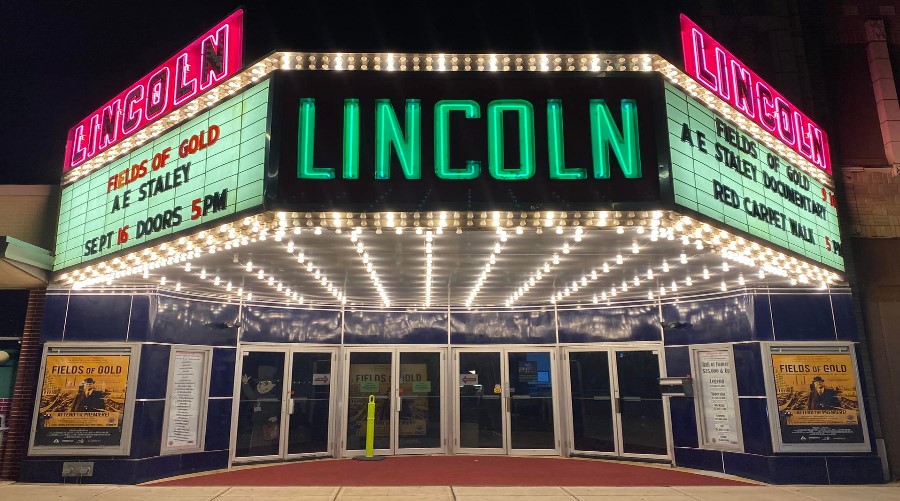
Tucked into the heart of Decatur, Illinois, the Lincoln Square Theater is more than just a splendid relic of early 20th-century entertainment. It’s a living piece of history—one with stories etched in its architecture, whispers in its hallways, and legends that refuse to fade into silence.
Before the Lincoln Square Theater, the site was occupied by a hotel first built in 1860, known as the Priest Hotel. Over the years it changed names—becoming the Decatur & Arcade Hotel among others. Fire ravaged the structure twice; once in 1904, then more disastrously in 1915. The second fire destroyed the hotel, killing at least two people—William E. Graham, noted as an engineer, and C. S. Guild, a traveling salesman. Several others were reportedly missing and never accounted for.
In 1916, the Lincoln Square Theater was built on that same hallowed ground. The theater was designed by the architectural firm Aschauer & Waggoner, adopting Art Nouveau and Beaux Arts styles that gave it an elegant, opera-house feel. It was intended to be “fireproof” — constructed of steel, concrete, and fireproof brick, with features designed to minimize fire risks.
Originally seating nearly 1,400, the theater was built to host live performances—vaudeville, plays, concerts—and silent films. It became a cultural anchor for Decatur. Over time, the entertainment shifted more toward movies, and later the theater fell into periods of decline, closures, and prolonged restoration efforts.
Reports of the Paranormal
Alongside its grand architecture and storied past, the theater is steeped in folklore. Over many decades, tales of ghosts, strange sounds, and other unexplained phenomena have gathered around the Lincoln. Visitors to the Lincoln Square Theater often describe a heavy atmosphere, as though the building itself remembers its turbulent past. Shadows are said to flit across the balcony seats, vanishing when approached. A recurring apparition, believed to be a stagehand who died during the 1915 fire, has been spotted roaming the backstage area, his presence accompanied by sudden drops in temperature.
One of the most enduring legends is that of a stagehand nicknamed “Red”. According to local lore, Red was a devoted theater worker, known to have only one arm; some say he lost it in World War I. He was shy, worked behind the scenes, loved the theater so much that even on his day off he’d come to the stage area.
There are varying accounts of how he died. One story has him slipping on a catwalk high above the stage, falling, and losing his arm in a tragic accident. Another version says he simply died in his sleep in the theater in 1927—no dramatic fall, just never woke up after lunch. Because of Red’s strong association with the theater, many of the paranormal sightings and experiences get attributed to his spirit.
Disembodied voices are another frequent report. Some investigators claim to have recorded whispers or laughter during quiet moments, while others describe the sound of footsteps pacing across the stage when no one is there. The smell of smoke occasionally drifts through the theater, reminding guests of the long-ago fire.
The Theater Today
The Lincoln Square Theater is no longer just a ghost story. It remains an active venue, restored in part, hosting concerts, community events, performances.
Its haunted reputation has become part of its identity. Ghost storytelling nights, Halloween events, and paranormal interest all help draw people. In a way, the legends amplify the theater’s mystique, giving it a deeper layer of meaning beyond its architectural heritage. For many, the supernatural tales are not a burden but an asset—something that connects past and present, stage and shadows. If you visit, keep your ears open and your flashlight handy. You just might catch a whisper, a shadow, or perhaps—if Red is there—you’ll glimpse a stagehand who never quite left.
Affiliations
Book a Tour

Accommodations
Claim this space!
Dining & Entertainment
Claim this space!
Suggested Reading