New Harbor, Maine
Fort William Henry, located in New Harbor, Maine, was built by the English in 1692 during King William’s War. It stood on the ruins of earlier colonial fortifications, including Fort Charles and Fort Pemaquid, both of which had been destroyed in earlier conflicts between English settlers and French-allied Wabanaki tribes.
Commissioned by Sir William Phips, the governor of Massachusetts Bay Colony, Fort William Henry was constructed on a massive scale for its time. Built of stone rather than wood, it featured walls more than 20 feet high and 6 feet thick, and it was armed with heavy cannon to protect settlers along the Maine coast. It was considered one of the strongest English fortifications in North America.
Despite its imposing design, the fort’s existence was short-lived. In 1696, just four years after its construction, French forces under Pierre Le Moyne d’Iberville, along with allied Native warriors, launched a siege. After several days of bombardment, the English garrison surrendered. The French destroyed much of the structure, leaving the settlement vulnerable. Over time, only fragments of the stone walls and foundations remained.
Paranormal Claims
The violent history of Fort William Henry has inspired tales of lingering spirits. Visitors to the site have claimed to hear echoes of cannon fire or musket shots carried on the ocean breeze. Shadowy figures, often described as soldiers in colonial uniforms, are said to appear briefly along the ramparts before vanishing.
The legend of Chief Taukolexis adds a chilling dimension to these accounts. Many who walk the grounds speak of feeling watched near the fort’s foundations. Some paranormal groups claim that his presence is among the most active at the site.
Chief Taukolexis
One of the most enduring stories tied to Fort William Henry is that of Chief Taukolexis, a Native leader who opposed English settlement in the region. Local tradition holds that Taukolexis was captured by the English and executed at the fort, allegedly by hanging. According to legend, his body was buried near the fort grounds, and his spirit has lingered ever since.
Reports claim that the ghost of Taukolexis has been seen along the ruins, described as a tall, spectral figure that appears to glare at visitors. His presence is often associated with sudden chills, feelings of dread, or the sense of being watched. Some paranormal enthusiasts suggest that his restless spirit represents the ongoing struggle between Native peoples and European settlers that defined Maine’s colonial history.
Whether rooted in fact or folklore, the story of Chief Taukolexis underscores the deep layers of conflict and memory preserved at Pemaquid.
Fort William Henry Today
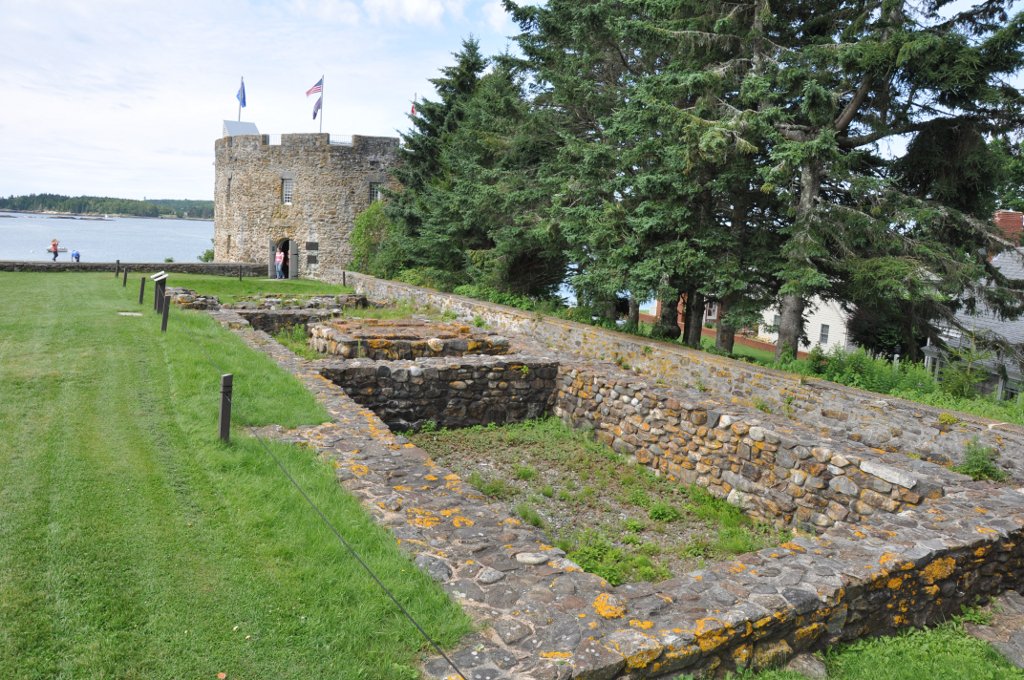
Today, the site of Fort William Henry is preserved within Colonial Pemaquid State Historic Site, one of Maine’s most significant early colonial settlements. Archaeological work at the site has uncovered artifacts from centuries of occupation, ranging from Indigenous tools to colonial pottery and weaponry.
A reconstructed stone fort now stands on the original site, built in 1908 as part of early preservation efforts. It houses a museum that interprets the history of Pemaquid, the cycles of settlement and destruction, and the broader conflicts of colonial New England.
Though the fort has long since fallen silent, its legacy continues to resonate. For visitors, Fort William Henry offers both a tangible link to the struggles of the 17th century and a chance to contemplate the spectral echoes that some believe remain along Maine’s rocky coast.
Contact
Old Fort Rd
New Harbor, Maine 04554
Affiliations
Book a Tour
Claim This Space!
Accommodations
Claim This Space!
Dining & Entertainment
Claim This Space!
Suggested Reading